
Every time a patient walks into a clinic, undergoes treatment, or picks up a prescription, that encounter creates information that has to be captured, organized, and protected. Physicians rely on it to make decisions. Insurance companies use it to process claims. Regulators expect it to be handled correctly and kept secure. Organizations need professionals who understand how to manage that information from intake to archive.
That is the role a health information management degree prepares you for. Earning a Bachelor of Science in Health Information Management (HIM) builds the abilities needed to keep healthcare data accurate, accessible, and secure. Whether you complete the program online or on campus, the skill set translates directly into the daily demands of the field. Here is a closer look at what that skill set actually includes.
What Is Health Information Management?
Health information management refers to the practice of collecting, organizing, maintaining, protecting, and using healthcare information throughout its lifecycle. It sits at the intersection of healthcare operations, information technology, data management, compliance, reimbursement, and quality improvement. Professionals in this field are not limited to one department; their work touches nearly every corner of a healthcare organization.
Connecting Healthcare, Data, and Technology
Health information professionals work with both clinical and administrative information. A single patient record might feed into treatment plans, billing codes, quality reports, and research databases at the same time. Making sure that data can support patient care, billing, reporting, compliance, and organizational decision-making requires an understanding of how healthcare systems, databases, and regulations connect to one another.
Supporting the Accuracy and Availability of Health Information
Healthcare organizations depend on records that are complete, consistent, and easy to retrieve. When information is missing or inconsistent, the effects ripple outward: claims get denied, reports become unreliable, and clinicians may not have what they need to make informed decisions. Health information professionals help prevent these gaps by applying consistent standards to how data is entered, stored, and verified.
Protecting Sensitive Patient Information
Beyond accuracy, health information professionals help organizations safeguard confidential data and follow the legal, ethical, and organizational rules that govern its use. Privacy and security responsibilities cover everything from how a record is first created to how it is eventually archived or destroyed.
Core Health Information Management Skills You’ll Develop
A Bachelor of Science in Health Information Management combines technical, analytical, regulatory, and administrative coursework into a single program. These competencies are not isolated from each other; they work together so graduates can help healthcare organizations manage information accurately, securely, and efficiently. The sections below outline the core health information management skills the degree is built around.
Medical Coding and Classification
Medical coding involves translating diagnoses, procedures, and healthcare services into standardized codes used for records, reimbursement, and reporting. Coursework such as Coding I and Coding II introduces these systems in stages, helping students build a working foundation in medical coding.
Medical Billing and Reimbursement
Coding connects directly to the financial side of healthcare, and a course like Medical Billing and Reimbursement shows students how. They learn how services get documented, how health information gets processed for payment, and why accurate data matters to an organization’s bottom line. A missed code or an incomplete chart can delay reimbursement or trigger a claim denial.
Electronic Health Record Management
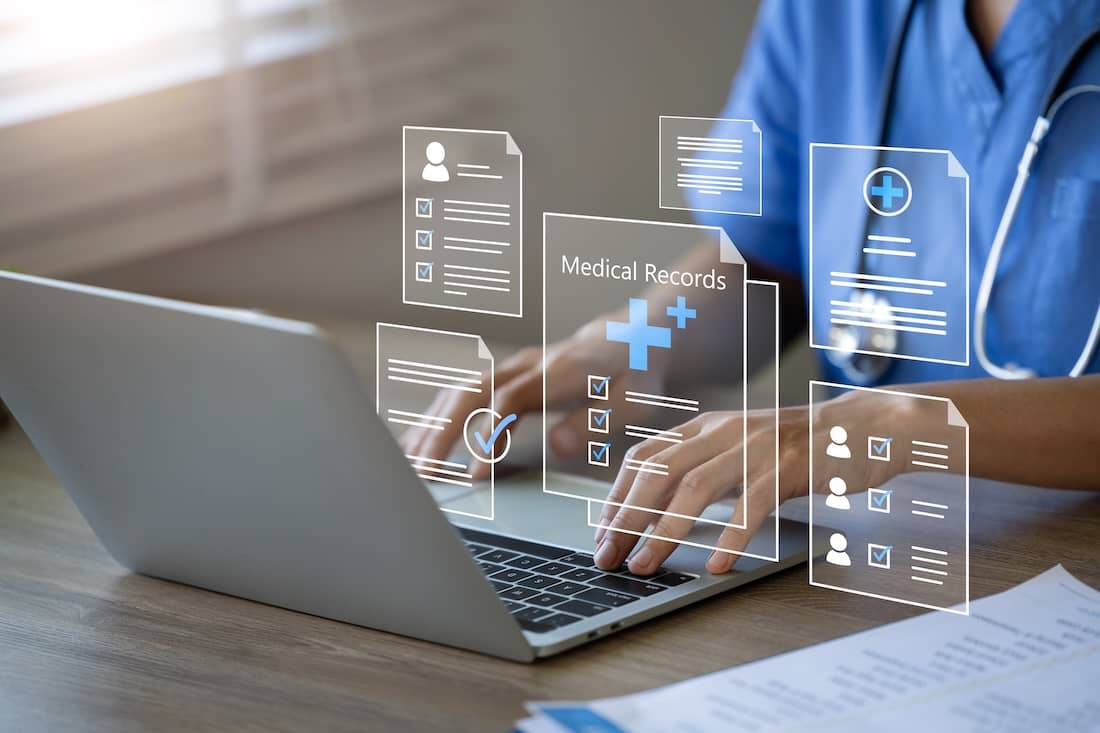
Electronic health records bring together the information that clinicians, administrators, billing teams, and other authorized staff rely on daily. Students learn to enter, organize, update, retrieve, and maintain information within these systems, developing practices that keep records usable long after the original entry was made.
Healthcare Database Management
Behind every electronic record sits a database, and healthcare organizations depend on these systems to store and retrieve enormous volumes of patient, operational, financial, and quality-related information. Coursework introduces foundational concepts related to database structure, data organization, accessibility, and system performance.
Health Data Analysis
Courses such as Health Care Statistics teach students to examine healthcare data, identify patterns, interpret statistics, and communicate findings clearly. This analysis helps organizations evaluate utilization, outcomes, efficiency, safety, and service quality.
Information Governance
Information governance covers the policies, responsibilities, standards, and processes used to manage information. Healthcare organizations need clear rules about how data gets created, stored, accessed, retained, shared, and eventually disposed of. Through this coursework, students learn to weigh data accuracy, ownership, accessibility, integrity, retention, and appropriate use together.
Data Standards and Interoperability
Healthcare information has to be represented consistently so that different departments, systems, and organizations can understand and exchange it. A course like Data Standards, Vocabularies, and Interoperability in Healthcare introduces these concepts in accessible terms, walking students through how information moves through healthcare settings and what happens when systems use different formats or terminology.
Privacy, Confidentiality, and Legal Compliance
Healthcare information is governed by a web of legal, ethical, and professional requirements. Students learn to evaluate appropriate access, patient confidentiality, data-sharing practices, documentation responsibilities, and organizational compliance, building judgment they will rely on long after graduation.
Healthcare Information Security
Protecting health information takes more than keeping records private. Organizations also need to defend their systems and networks against unauthorized access, loss, disruption, and cyberthreats. Students build this awareness through coursework in computer security, network defense and countermeasures, and healthcare privacy and security.
Healthcare Quality Assessment
Reliable data allows healthcare organizations to measure performance, identify areas for improvement, and evaluate the safety and effectiveness of the services they provide. Coursework such as Health Care Quality Assessment prepares HIM professionals to help ensure that quality initiatives rest on complete, trustworthy information rather than guesswork.
Healthcare Research and Evidence Evaluation
Students also learn to locate credible information, interpret research, evaluate evidence, and present findings clearly. These abilities matter when organizations review policies, assess performance, or consider operational changes.
Interested in pursuing a degree?
Fill out the form and get all admission information you need regarding your chosen program.
This will only take a moment.
Message Received!
Thank you for reaching out to us. We will review your message and get right back to you within 24 hours.
If there is an urgent matter and you need to speak to someone immediately you can call at the following phone number:
- We value your privacy.
Professional Skills That Support Effective HIM Practice
Managing health information takes more than technical knowledge. HIM professionals also need to communicate clearly, follow ethical standards, work across departments, manage their own responsibilities, and understand how a healthcare organization actually operates day to day.
Attention to Detail and Data Accuracy
Accuracy matters when working with codes, records, databases, reimbursement information, and reports, since even a small error can affect billing, compliance, or patient care. Students learn to recognize inconsistencies, apply established standards, and approach healthcare information with the level of care the work demands.
Critical Thinking and Problem-Solving
Students learn to evaluate information problems, investigate their causes, weigh possible responses, and consider the effects of a decision before making it. That might mean resolving inconsistent data, improving an information workflow, or determining whether a particular access request aligns with policy.
Communication Across Healthcare Departments
Health information professionals often communicate with clinicians, administrators, billing personnel, technology teams, compliance staff, and organizational leaders — sometimes in the course of a single day. Translating technical or regulatory information into language each of those audiences can understand is a skill in its own right.
Ethical and Professional Judgment
Access to sensitive information comes with responsibility, discretion, and a clear understanding of professional expectations. Coursework in healthcare ethics, privacy, law, and information management pushes students to think through the consequences of how information gets used, not just whether it is technically permitted.
Management and Supervision
Courses like Principles of Management and Supervision and Health Information Services Management introduce students to managing people, processes, and information services. These classes lay the groundwork that can support future leadership responsibilities as graduates gain experience, though they are not a guarantee of an immediate management title.
Applying HIM Skills Across Healthcare Settings
Health information touches nearly every corner of the healthcare system, which means graduates can apply these skills in a range of settings. The specific duties available depend on the employer, the position, professional experience, and any certifications a graduate holds.
Hospitals and Health Systems
In larger healthcare organizations, health information skills support records management, coding, data quality, privacy, compliance, reporting, reimbursement, information governance, and enterprise system operations. The scale of a hospital system often means these responsibilities get distributed across dedicated teams rather than handled by a single person.
Physician Practices and Outpatient Care
Smaller clinical settings need many of the same things: accurate documentation, functioning electronic records, coding, billing information, privacy procedures, and efficient information workflows. Staff in these environments often wear more hats, so a broad skill set tends to be especially useful.
Insurance and Reimbursement Organizations
Coding, healthcare data, reimbursement, managed care, and compliance knowledge can also apply to organizations that review claims, coverage, utilization, or healthcare payment information. These roles rely heavily on the same coding and billing foundation built throughout the program.
Public Health, Research, and Government Settings
Healthcare statistics, data analysis, information governance, and research skills can support reporting, program evaluation, public health initiatives, or regulatory activities in these settings. Graduates should not expect these skills to automatically qualify them for roles like epidemiologist, which typically require additional specialized training, but the foundation this degree provides is a relevant starting point for related work.
Build Skills at the Intersection of Healthcare, Data, and Technology at Potomac
Healthcare organizations keep generating more information every year, and they need people who know how to manage it responsibly. A health information management degree online from University of the Potomac gives you a foundation across coding, data analysis, privacy, security, governance, and communication — skills employers often look for in this field. Whether you are drawn to hospitals, physician practices, insurance organizations, or public health agencies, the health information management skills built into this program apply across settings.
University of the Potomac offers this HIM degree online, so you can complete coursework around personal responsibilities. If you are ready to build practical, in-demand skills in health information management, explore the Bachelor of Science in Health Information Management at University of the Potomac and see how the curriculum lines up with the career you have in mind.