

The first five years of a child’s life shape how they think, communicate, form relationships, and move through the world. During this window, the brain develops faster than at any other stage, and the adults surrounding a child play an outsized role in that growth. Professionals who work in early learning settings need more than patience and warmth; they need practical knowledge of how children grow, how to communicate with families, and how to manage a classroom in ways that support learning at every stage.
An associate degree in early childhood development gives students a structured path toward these competencies. Instead of relying on trial and error once they enter the workforce, students build foundational skills in observation, communication, and instructional planning throughout their coursework, preparing them for entry-level roles in early childhood education and care.
Why Practical Skills Matter in Early Childhood Education
Classroom theory only carries a new educator so far. The professionals who thrive in early learning environments are the ones who can translate what they know about child development into daily practice, whether that means redirecting a frustrated toddler, adjusting an activity on the fly, or noticing when a child needs extra support. Practical skills close the gap between understanding how children grow and knowing what to do about it in the moment.
Supporting Children’s Growth Through Everyday Interactions
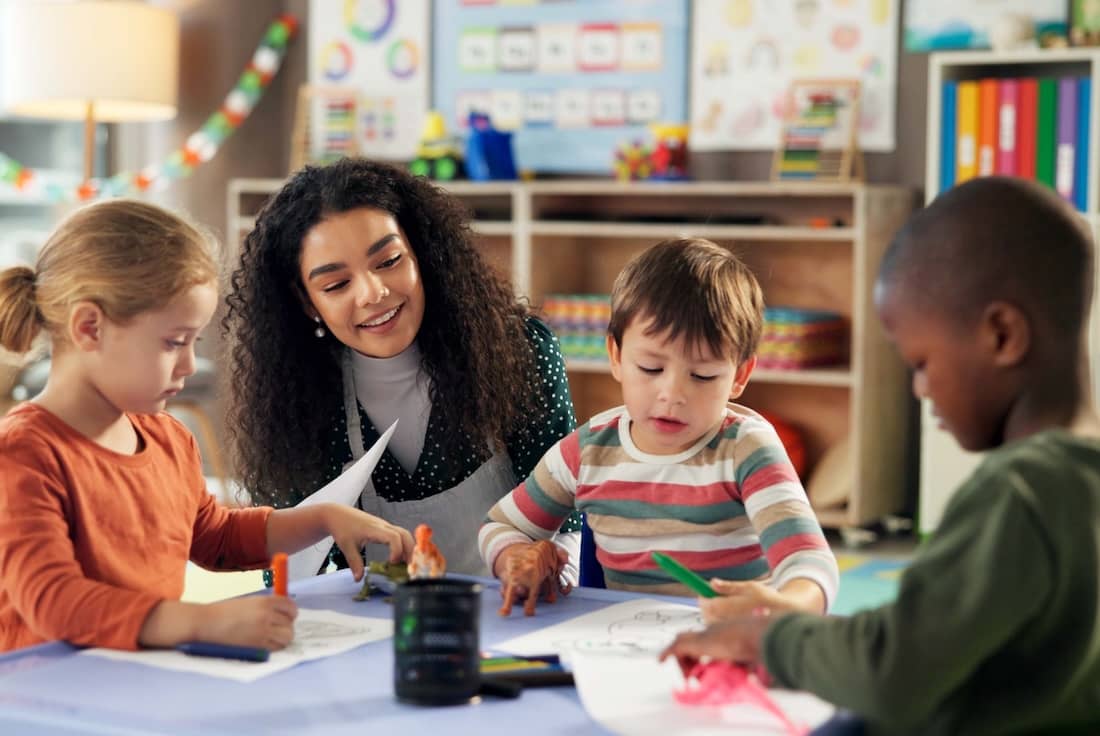
Much of a young child’s learning happens outside of structured lessons. A morning greeting, a snack-time conversation, and a disagreement over shared toys each carry real developmental weight. Early childhood professionals use these everyday interactions to model language, encourage problem-solving, and reinforce social skills. Educators who know how to turn routine moments into learning opportunities help children build vocabulary, regulate emotions, and develop trust in the adults around them.
Building Confidence Before Entering the Workforce
Walking into a classroom for the first time can feel intimidating, even for someone who understands child development in theory. Developing early childhood development skills while still a student gives future educators a chance to practice communicating with children, families, and colleagues before the stakes are high. Students who complete hands-on coursework and field experience tend to feel more prepared to step into a classroom, a daycare center, or a family childcare setting on day one.
Core Skills You’ll Develop in an Early Childhood Development Program
Every early childhood role looks a little different. Some educators work in a preschool classroom, others in a family childcare home, and still others as an assistant supporting a lead teacher. Most, however, rely on a shared set of competencies. Early childhood development programs typically build these competencies through coursework that pairs child development theory with applied practice, so that students graduate ready to create positive learning environments, support children’s growth, and collaborate with families and coworkers. The sections below outline the essential skills students develop throughout the program.
Child Observation and Developmental Awareness
Observation is one of the most valuable tools in an early childhood educator’s toolkit. Students learn to watch how children play, interact with peers, and respond to new activities, then use those observations to understand where each child stands developmentally. This skill helps educators recognize individual strengths, flag areas where a child might benefit from additional support, and plan age-appropriate learning experiences. A teacher who notices that a child struggles with fine motor tasks, for example, can adjust activities to build that skill gradually.
Effective Communication with Families
Parents and caregivers are a child’s first teachers, and early childhood professionals work best when they treat families as partners rather than bystanders. Coursework in this area covers how to share updates about a child’s progress, listen to a family’s concerns without becoming defensive, and communicate clearly across cultural and language differences. Strong communication with families keeps learning consistent between home and the classroom while building trust that encourages families to raise concerns before small issues become larger ones.
Classroom Management and Learning Environment Support
Managing a room full of young children calls for more than rules and consequences. Students learn to set predictable routines, arrange physical spaces that invite exploration, and encourage positive behavior before problems arise. A well-organized classroom, with clear transitions, accessible materials, and defined areas for different activities, helps children feel safe and understand what is expected of them. Proactive management techniques like these reduce disruptions and give children more time to engage with learning.
Planning Developmentally Appropriate Learning Activities
Good early childhood educators plan with intention. Coursework in this area teaches students to design activities that match a child’s developmental stage while still challenging them to grow, whether that means a sensory bin that builds language skills for toddlers or a group project that helps preschoolers practice cooperation. Activities built around exploration, creativity, and problem-solving give children room to test ideas, make mistakes, and build confidence in their own abilities.
Developmental Assessment and Documentation
Assessment in early childhood looks different from assessment in later grades. Rather than assigning grades or diagnosing conditions, educators observe and document what they see: how a child communicates, plays, and interacts with others over time. Students learn methods for recording these observations and using them to guide future lesson planning. This kind of documentation gives educators and the families they work with a clear picture of a child’s progress while staying focused on supporting learning rather than diagnosing developmental conditions, which falls outside an early childhood educator’s role.
Building Positive Relationships with Young Children
Trust is the foundation of early learning. Students develop skills for connecting with children individually, encouraging positive interactions between peers, and responding to a child’s emotional needs with patience rather than frustration. Educators who build genuine relationships with the children in their care create classrooms where kids feel safe enough to take risks, ask questions, and express themselves. Those conditions, in turn, support healthy social and emotional growth.
Interested in pursuing a degree?
Fill out the form and get all admission information you need regarding your chosen program.
This will only take a moment.
Message Received!
Thank you for reaching out to us. We will review your message and get right back to you within 24 hours.
If there is an urgent matter and you need to speak to someone immediately you can call at the following phone number:
- We value your privacy.
Professionalism and Collaboration
Early childhood education rarely happens in isolation. Coursework introduces students to what it means to work as part of a team that includes lead teachers, administrators, families, and sometimes specialists supporting a specific child’s needs. Topics include professional ethics, reliable communication, and the kind of dependability that keeps a classroom running smoothly when multiple adults share responsibility for the same group of children.
Applying These Skills in Early Childhood Settings
Knowing a skill and applying it under real conditions are two different things. The transition from classroom coursework to a working environment tends to go more smoothly for students who have already practiced these competencies in applied settings.
Supporting Children Throughout Daily Routines
Observation, communication, classroom management, and instructional planning show up constantly during a typical day, from arrival and breakfast to circle time, outdoor play, and naptime. Educators draw on all of these skills at once: watching for a child who seems distressed, adjusting a lesson because attention is fading, and keeping the room calm during a transition.
Encouraging Children’s Learning and Development
Beyond managing the day, educators use these same skills to actively push learning forward. A well-timed question during play can build language skills, and a small group activity can encourage cooperation. Skill development in early childhood happens largely through these intentional, in-the-moment choices rather than through worksheets or formal instruction alone, and it touches cognitive, language, social, emotional, and physical growth all at once.
Preparing for Entry-Level Early Childhood Roles
These foundational competencies translate directly into entry-level positions such as childcare worker, preschool assistant teacher, or teacher aide. Employers in early learning settings look for candidates who already understand child development, classroom routines, and family communication, which is exactly what a well-rounded program is designed to build.
How University of the Potomac’s Early Childhood Development Program Helps You Build These Skills
University of the Potomac designed its associate degree in early childhood development to give students a direct path toward the skills outlined above, pairing foundational theory with courses built for practical application.
Career-Focused Early Childhood Coursework
The program’s required courses cover growth and development, guidance and classroom management, family and community relations, health and safety, creative experiences, language arts and science concepts, and methods and materials for early learning. Courses such as Growth and Development I and II, Guidance and Classroom Management, and Family and Community Relations map directly into the skills prospective educators need on day one of a new job, and a supervised field experience course gives students a chance to practice those skills with infants and toddlers before graduation.
Flexible Learning Options
Many students pursuing early childhood development programs are already working, raising a family, or juggling both. University of the Potomac offers online and on-campus formats, giving students the flexibility to complete coursework around existing responsibilities instead of putting a career change on hold.
A Strong Foundation for Working with Young Children
Graduates of University of the Potomac’s early childhood development program leave with foundational, classroom-ready early childhood development skills that apply across a range of entry-level early learning positions, from preschool classrooms to family childcare settings.
Turning Classroom Learning into a Career with Young Children
Working with young children calls for a specific blend of patience, knowledge, and hands-on skill, and an associate degree in early childhood development is built to develop exactly that blend. From observation and family communication to classroom management and developmentally appropriate planning, the skills covered here prepare graduates to step into early learning roles with real confidence.
University of the Potomac’s early childhood development program pairs career-focused coursework with flexible online and on-campus options, giving students a practical route into the field. For anyone ready to start building a career working with young children, University of the Potomac’s associate degree offers a solid place to begin.